How to Astral Project: A Step-by-Step Guide for Beginners
A clear, grounded guide to having your first out-of-body experience — safely, calmly, and at the right time.
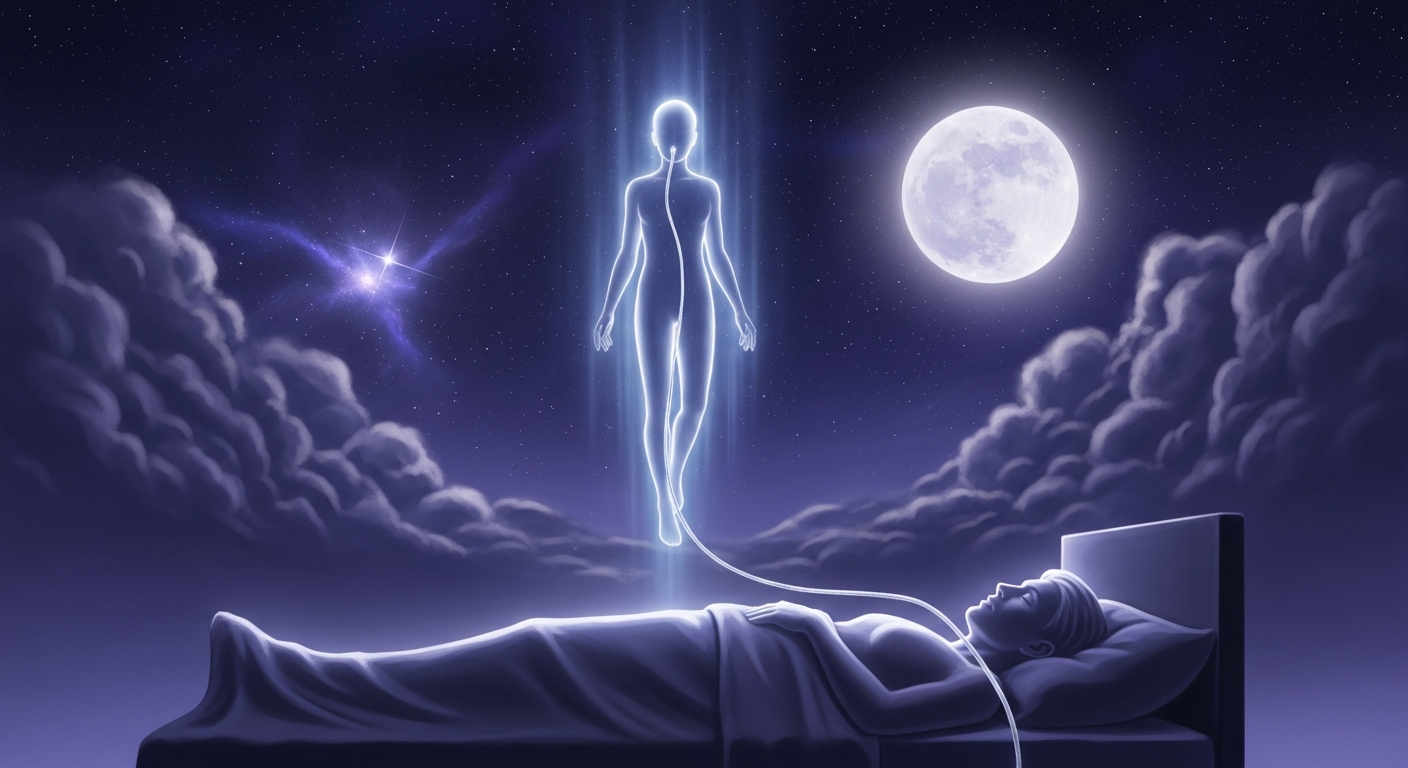
Astral projection is one of the most talked-about experiences in the world of consciousness exploration — and one of the most misunderstood. This guide strips away the mystique and walks you through what it actually is, whether it is safe, how to prepare, and a simple step-by-step method you can practice tonight. Because the practice works best when it is timed to your natural rest rhythm, we will also cover the best time of day and moon phase to try — a natural fit for a site built around the 28-day lunar month.
What is astral projection?
Astral projection is a type of out-of-body experience (OBE) in which your awareness seems to separate from your physical body while you remain fully conscious. Many traditions describe it as projecting a subtle or "astral" body that can move and perceive independently of the physical one. Unlike an ordinary dream, an astral experience is usually marked by a striking sense of being awake, alert, and present.
Astral projection vs. lucid dreaming vs. OBE
These terms overlap, so it helps to separate them. A lucid dream is a dream in which you know you are dreaming and can influence it — your awareness stays inside the dream world. An out-of-body experience is the broad term for any sense of perceiving the world from outside your physical body. Astral projection is a deliberately induced OBE framed within a spiritual or energetic model. In practice, the doorway to all three is the same: the threshold between waking and sleep.
Is astral projection real — and is it safe?
People across cultures and centuries have reported out-of-body experiences, and they are well documented in psychology as a real subjective phenomenon. Whether the experience is purely a state of consciousness or something more is a question each person explores for themselves. Either way, the methods used to induce it — deep relaxation, focused attention, and working with the edge of sleep — are real, learnable skills.
As for safety: for healthy people, astral projection is generally considered safe. It is a self-induced state of relaxed awareness, and you return to ordinary waking consciousness on your own, just as you wake from a dream. There is no credible evidence that you can get "stuck" outside your body. If you have a history of seizures, psychosis, or significant mental-health conditions, talk to a professional before practicing. The most common "danger" is simply fear — and learning to stay calm is part of the skill.
How to prepare
Preparation matters more than any single technique. Set yourself up well and the experience becomes far more likely.
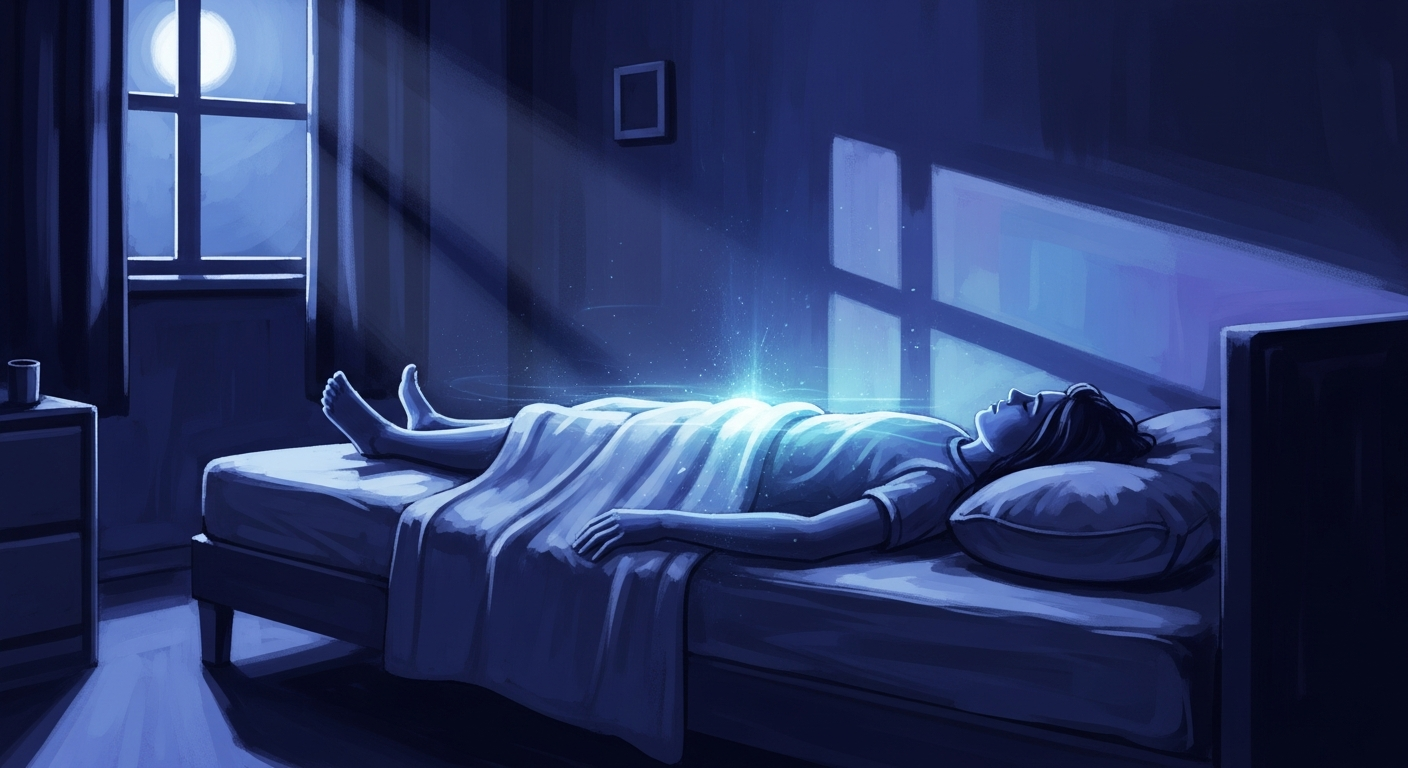
Pick the best time
The strongest window is early morning, after 4–6 hours of sleep. Your body slips back into light, dream-rich sleep, making the half-awake state much easier to reach.
Work with your rhythm
Astral practice rides your circadian and sleep cycles. A steady sleep schedule — the same idea behind the 28-day lunar reset — makes the threshold predictable.
Try a lunar window
Many practitioners time attempts to the full or new moon. Check tonight's phase on the moon tracker and pick a night that feels right.
Set the scene
Cool, dark, quiet room. Lie on your back. Loosen tight clothing. Tell yourself a calm, clear intention: "Tonight, I will stay aware as my body falls asleep."
How to astral project: the step-by-step method
This is the classic relaxation-to-separation sequence. Move slowly and never force anything — the entire skill is about allowing, not pushing.
- Relax your body completely. Lie on your back, close your eyes, and progressively relax every muscle from your toes to your scalp until your body feels heavy and still. Breathe slowly and evenly.
- Reach the hypnagogic state. Let your mind stay alert while your body falls asleep. Watch the drifting images behind your eyelids without engaging them. The goal is the "mind awake, body asleep" threshold.
- Deepen into the vibrational state. Many people feel buzzing, vibrations, heaviness, or a sense of energy moving through the body. Stay calm and let it build rather than reacting — reacting tends to pull you back to waking.
- Separate from the physical body. Using intention or a technique like imagining rolling over, floating upward, or climbing a rope, gently move your awareness out of the body. Do not strain — let it feel effortless.
- Explore, then return safely. Stay calm and observe your surroundings. To return, simply think of your physical body or focus on a finger or toe; your awareness snaps back automatically. Then lie still and recall what happened.
Popular astral projection techniques

Once you understand the core sequence, these named techniques are just different "exit" methods for step four:
- The Rope Technique. Imagine an invisible rope above you and "climb" it hand over hand with your awareness, letting the pulling sensation lift you out.
- The Roll-Out. When you feel the vibrations, imagine gently rolling over sideways out of your body, as if turning over in bed without using muscles.
- The Float / Lift-Out. Simply intend to float upward toward the ceiling, feeling lighter and lighter until you drift free.
- The Wake-Back-to-Bed (WBTB). Sleep 4–6 hours, wake briefly, then return to bed holding your intention — the single most effective timing trick.
Signs you are close
These sensations are normal and a good signal you are approaching separation — none of them are dangerous:
- Buzzing, humming, or vibrations through the body
- A feeling of heaviness, paralysis, or "sinking" (often called sleep paralysis — harmless in this context)
- Sounds like wind, rushing, or a loud pop
- A sense of floating, tilting, or rocking
- Vivid imagery or a feeling of expanding beyond the body
Common mistakes and how to fix them
- Trying too hard. Effort creates tension, which wakes you up. Aim for relaxed, passive expectation.
- Getting excited. The moment separation begins, excitement snaps you back. Stay flat and calm.
- Practicing when exhausted. If you are too tired you fall asleep; too alert and you cannot drift. The early-morning window balances both.
- Giving up too soon. For most people this is a skill built over weeks. Consistency beats intensity.
Frequently asked questions
What is astral projection?
Astral projection is a type of out-of-body experience (OBE) in which your awareness seems to separate from your physical body while you stay fully conscious. Many traditions describe it as projecting a subtle or "astral" body that can move and perceive independently of the physical one.
Is astral projection real?
People across cultures and centuries have reported out-of-body experiences, and they are well documented in psychology as a real subjective phenomenon. Whether the experience is purely a state of consciousness or something more is a question each person explores for themselves. Either way, the practices used to induce it — deep relaxation, focused attention, and working with the edge of sleep — are real, learnable skills.
Is astral projection safe? Can I get stuck?
For healthy people, astral projection is generally considered safe — it is a self-induced state of relaxed awareness, and you return to ordinary waking consciousness on your own, just as you wake from a dream. There is no credible evidence that you can get "stuck" outside your body. If you have a history of seizures, psychosis, or significant mental-health conditions, talk to a professional first.
How long does it take to learn astral projection?
It varies widely. Some people have their first experience within days, while for most it takes weeks or months of consistent practice. The biggest factors are regular relaxation practice, patience, and learning to stay calm and aware at the threshold of sleep without falling asleep or getting excited and waking up.
What is the best time and moon phase to astral project?
The most reliable window is in the early morning after 4–6 hours of sleep, when the body re-enters light, dream-rich sleep and the mind drifts naturally into the hypnagogic state. Many practitioners also like to time attempts to the full moon or new moon, when the lunar cycle and their own rest rhythm feel heightened. You can track the current phase with the 13cal.net moon tracker.
Keep exploring
- Track tonight's moon phase — pick the right night to practice
- The 28-day lunar reset — align your body's rhythm with the moon
- Is the 13 month calendar lunar?
- The 13 month calendar home